We’ve recently visited the other side of Panama — the Caribbean coast. Our original plan was to go to Colón, the second-largest city in the country, with a population of around 200,000 people. We wanted to see the sandy Playa Sherman beach on the western side of the canal.
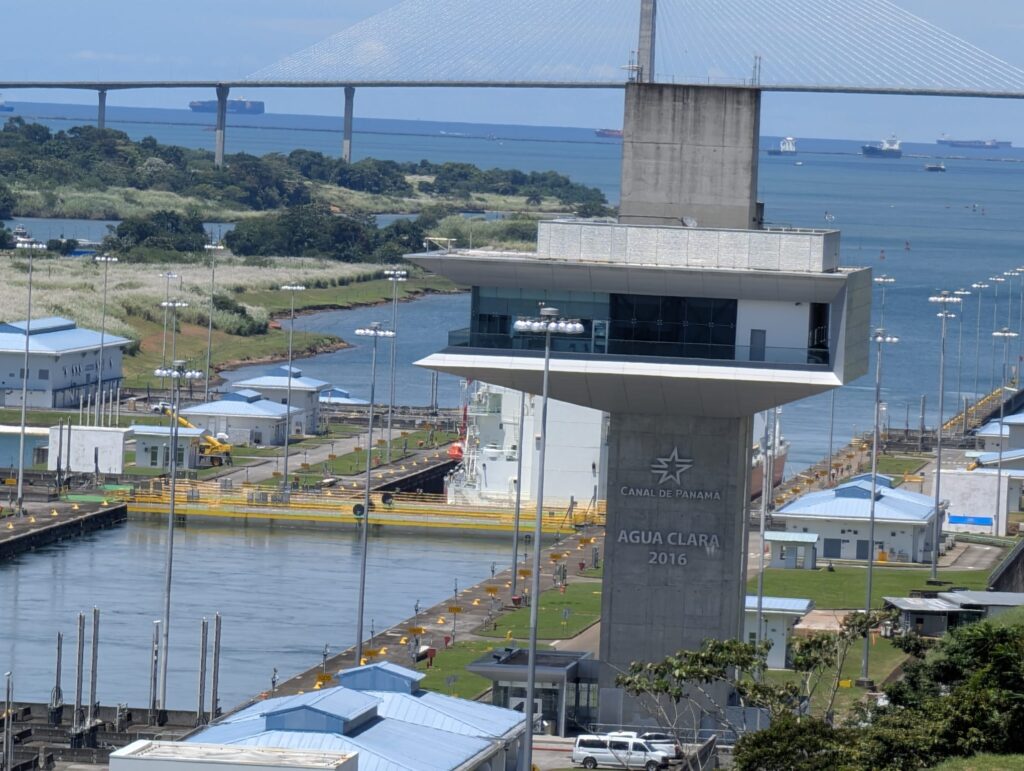
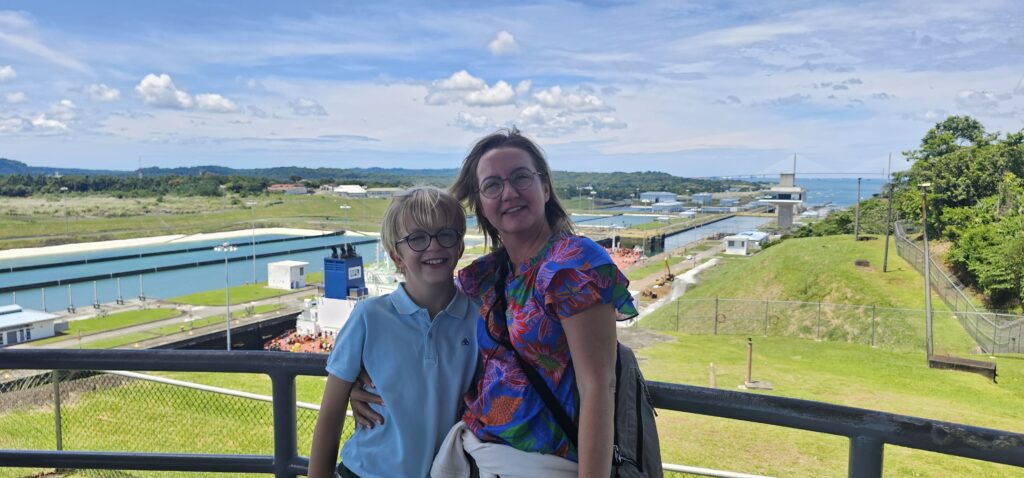
We started our trip at the Agua Clara Locks Visitor Center, where the new canal locks are located on the Atlantic side. We spent a couple of hours watching enormous vessels pass through the triple-chamber locks, which raise or lower ships by about 26 meters between sea level and Gatún Lake — all using gravity and rainwater, without a single pump. Each lock chamber is 427 m long and 55 m wide, holding over 190,000 cubic meters of water, roughly the volume of 76 Olympic-size swimming pools.
- “View from Agua Clara Locks — ships rising 26 m powered only by rainwater.”
Afterward, we took a shuttle bus over the Atlantic Bridge, one of only two permanent crossings of the canal, to see the original Gatún Locks, completed in 1914. Standing next to them feels like touching history — these are the same locks that revolutionized world trade more than a century ago.
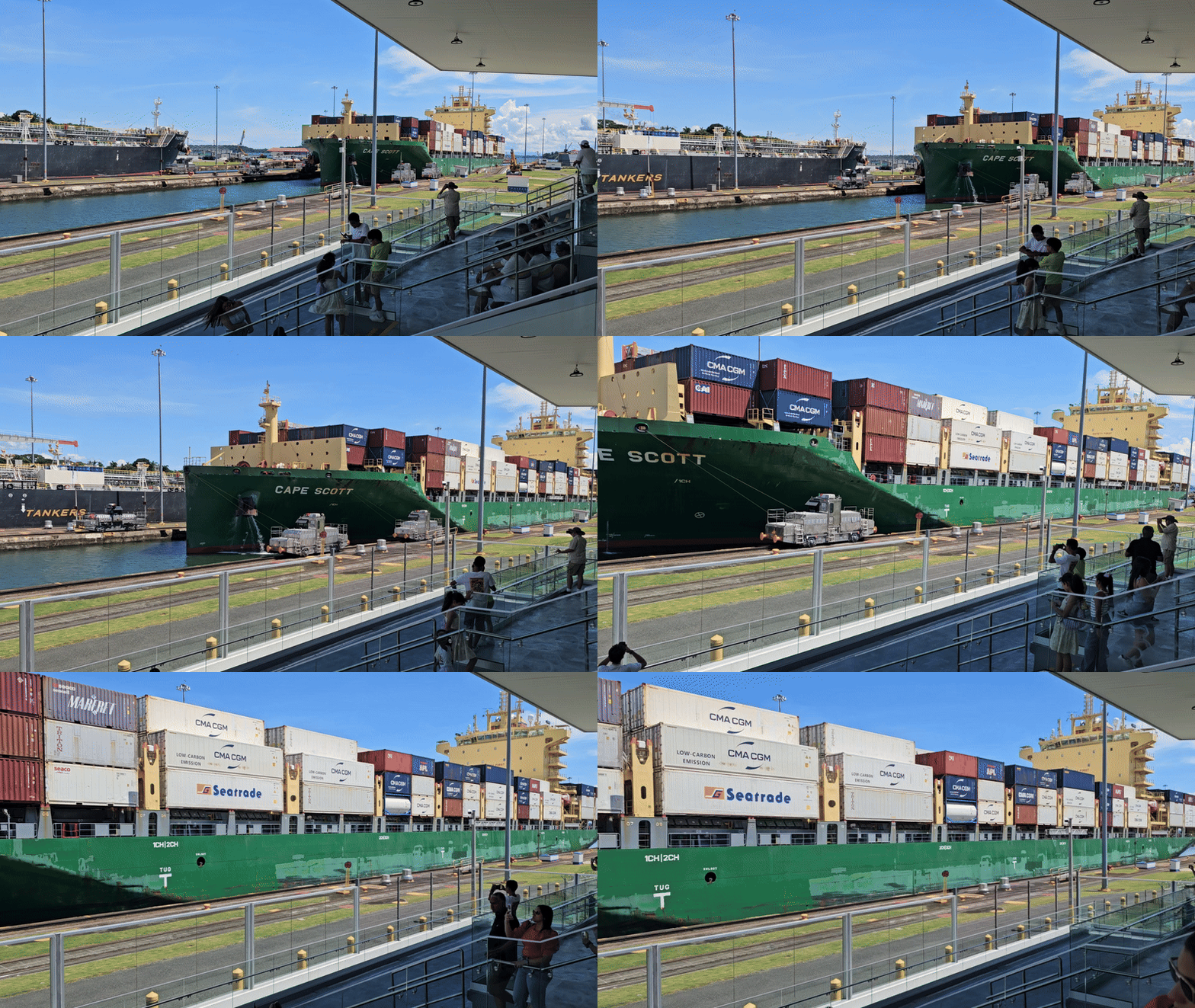
- Panamax container ship being pulled by electric locomotives through the locks.
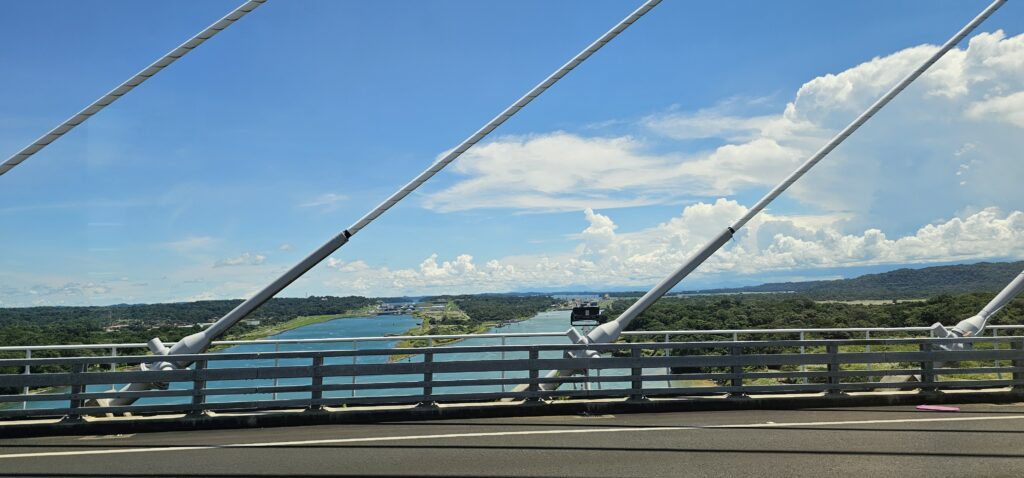
- View of both lock systems — Agua Clara on the left and the legacy Gatún Locks on the right
When we arrived in Panama, I hadn’t realized that since June 26, 2016, the word Panamax no longer defines the largest ships that can transit the canal. With the expansion project and the new Neopanamax locks, the canal can now handle vessels up to 366 m long, 49 m wide, and carrying about 14,000 TEU (twenty-foot containers) — nearly triple the original capacity.
For the largest vessels, the transit fee can reach USD 1 million for the 8-hour passage, but it still saves shipowners roughly two weeks of travel time and about USD 350,000–500,000 in fuel and operational costs compared to sailing around Cape Horn or through the Straits of Magellan.
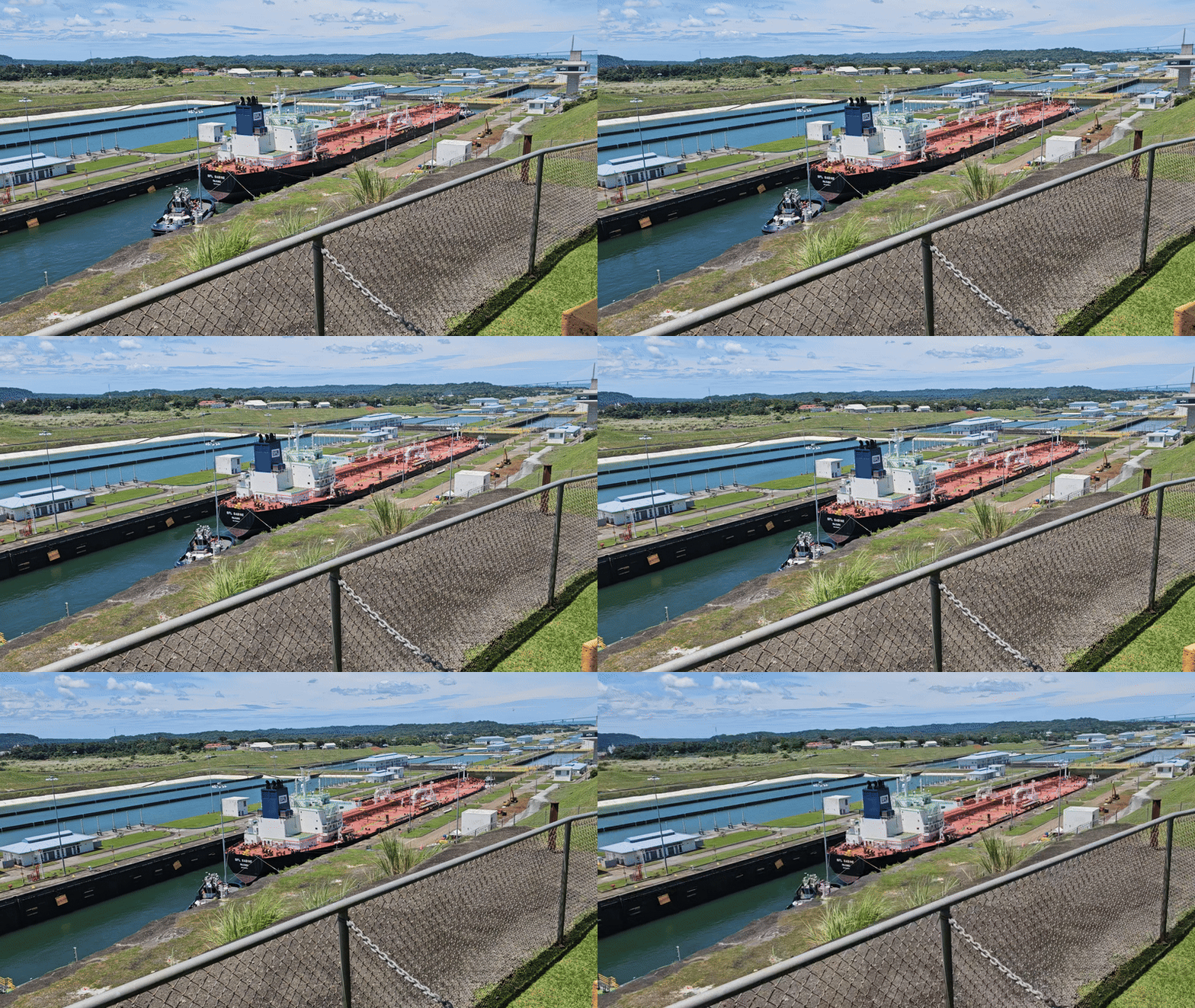
It was mesmerizing to watch this choreography of steel and water up close — massive ships silently rising and descending through the locks, guided only by gravity and precise engineering.
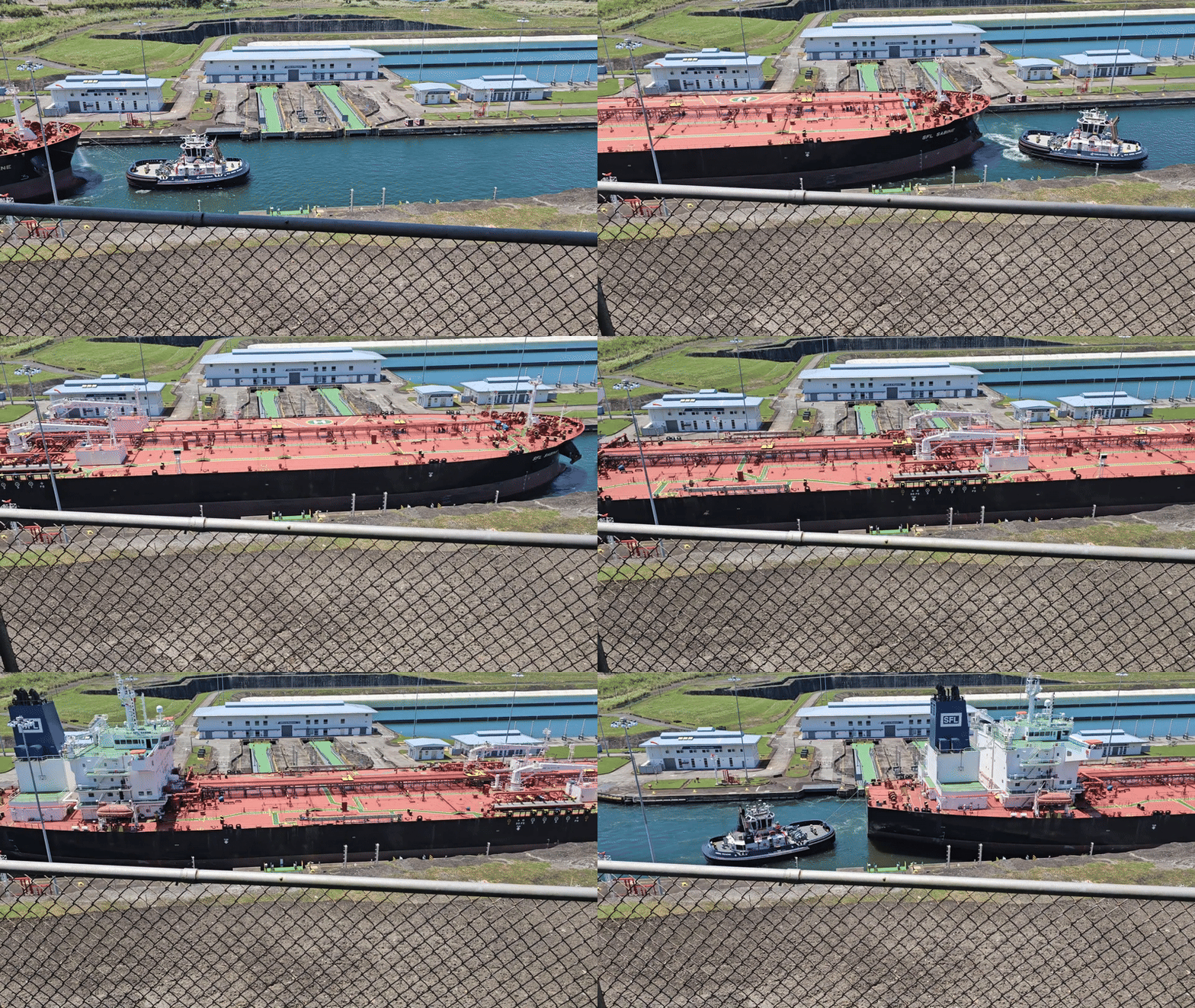
- “A Neopanamax tanker entering the first lock chamber.”
We spent so much time watching and learning about the locks that there was no daylight left to visit the beach, so we decided to continue directly to Colón.
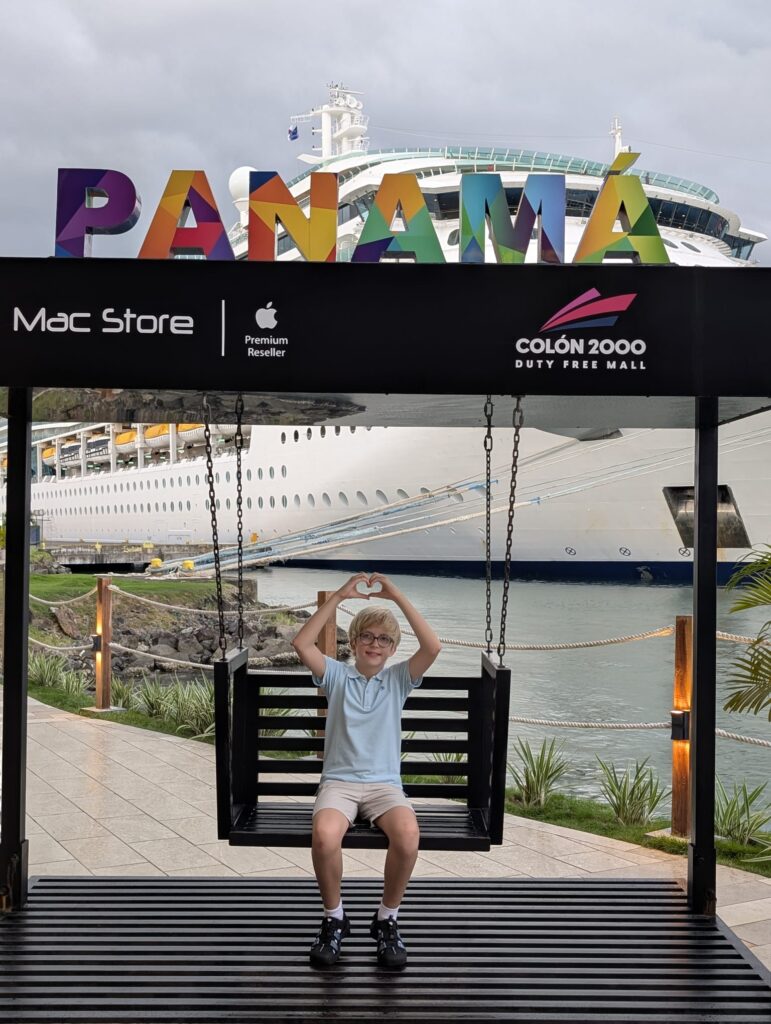
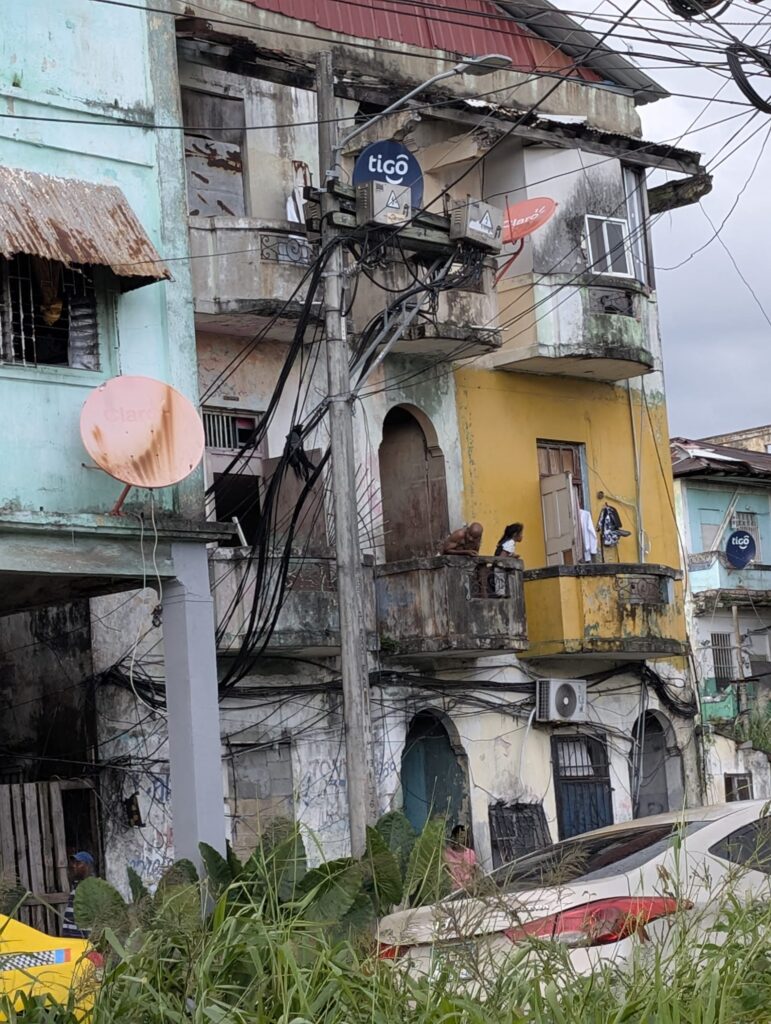
Although it is technically the country’s second-largest city, a major port of call, and a stop for large cruise ships, it is not a place that leaves a good impression. Colón feels industrial, worn-down, and home to a visibly poor population. Apart from the Colón Free Zone shopping mall, there is very little to see. Panama is a country of stark contrasts. Skyscrapers rise beside houses on the verge of collapse. Beautifully restored colonial villas stand opposite buildings reduced to ruins. Ferraris and Lamborghinis park next to barely driveable cars, often serving as taxis. It’s a place where luxury and decay coexist on the same street, separated only by a few meters and a world of difference.